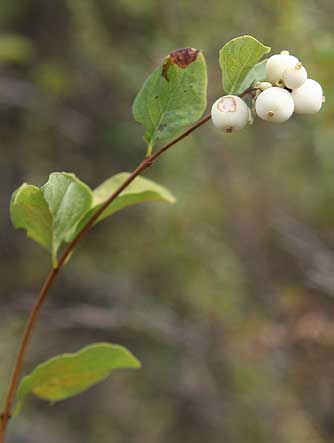
Common snowberry
As kids we used to refer to common snowberries as poisonberries or soapberries, typical made-up names for odd-looking berries-- but now those names seem to make sense. When eaten, snowberries can cause vomiting and dizziness and when smashed in water, they do foam up. Despite their toxicity, Native Americans are reported to have eaten snowberries to settle the stomach after a fatty meal. The berries can be important forage for birds and mammals including quail, grouse, and bears. Snowberry stems provide food for rabbits and mice, its vegetation provides browse for deer and elk and its leaves are the food source for a variety of interesting insects such as Lorquin’s admiral butterfly, chalcedon checkerspot butterfly, western sheep moth, snowberry sphinx moth, snowberry clearwing or bumble-bee moth, and honeysuckle sawfly. These shrubs also provide hiding places for bird nests and burrows, and a considered good habitat for various living creatures.
Snowberry bushes are attractive in spring in summer, having green leaf rounds that break sunlight into nickels and quarters that dapple the shade. These shrubs are also interesting at other times of year as its berries remain on the plant until eaten as a backup food source in meager winters —or until they eventually drop off. Seeds from these shrubs are spread by birds, and they re-sprout readily after fires from spreading rhizomes. People plant them in disturbed sites to help restore damaged places to better ecological health.
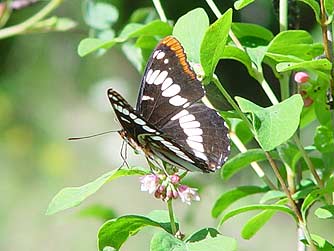
Flowering common snowberry
host plant for Lorquin's
admiral butterfly
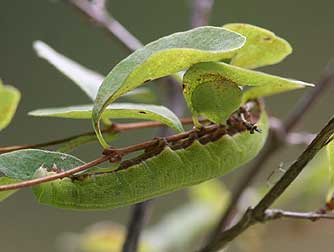
Common snowberry
host plant for a snowberry sphinx moth caterpillar
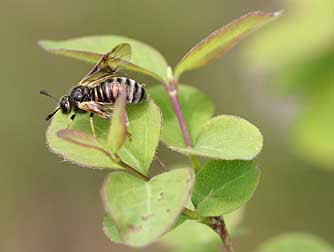
Common snowberry
host plant for honeysuckle sawfly
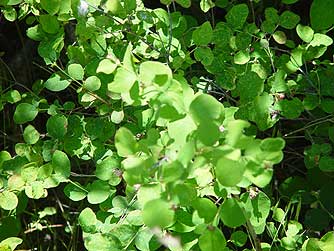
Common snowberry
with coin-like leaves
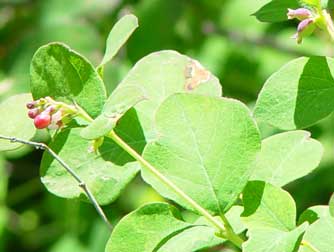
Common snowberry, Symphoricarpos albus
leaves and young berries
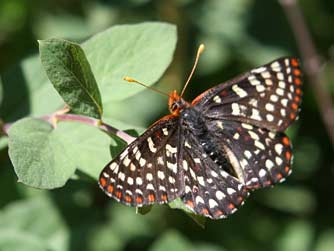
Common snowberry
host plant for Chalcedon checkerspot butterfly