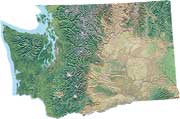
Western Washington image

Central Washington image

Eastern Washington image

Header

Eastern Washington

Male Western-tailed blue butterfly picture - Cupido amyntula
Western-tailed Blue Butterfly male

Western-tailed blue butterflies or Cupido (sometimes Everes) amyntula live in western, central and eastern Washington in undistrubed, moist habitats. These butterflies are adapted to rely only on legumes having large pods for host plants, such as peavine, vetch, milkvetch, and locoweed. Its caterpillars eat into its host pod, sealing the hole with silk, consume the legume seeds and overwinter in the pod. Butterflies take flight in spring and summer.

Tailed blues have a narrow tail and orange lunule on the hindwing, like a hairstreak butterfly-- a false head that fakes-out birds and boosts survival rate. The upper wing surface of males is bright blue with a purple cast, while female dorsal wings are brown with some blue at the base. The ventral wing color of both male and female is white with slight spotting. In comparison, the eastern-tailed blue butterfly has larger spots, more than one orange lunule at the tail, and a gray ventral wing color. Wingspan is 7/8 to 1-1/8 inch.

Female Western-tailed blue butterfly picture - Cupido amyntula
Female Western-tailed Blue or Cupido amyntula
Kettle Range, Washington

Two-tailed Swallowtail Pictures

Two-tailed Swallowtail Butterfly

Eastern Washington

» Eastern Washington Butterflies
» Eastern Washington Insects
» Eastern Washington Wildlife Photos
» Eastern Washington Animals and Plants

Eastern Washington Map of Wildlife and Recreation Areas

Related Information
Two-tailed Swallowtail butterfly - Nearctica
Two-tailed Swallowtail identification and Washington county distribution map
Two-tailed Swallowtail Artwork


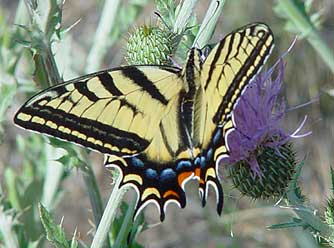
Picture of two-tailed swallowtail butterfly
Two-tailed Swallowtail Butterfly on wavy thistle

Two-tailed Swallowtail butterfly - Papilio multicaudata
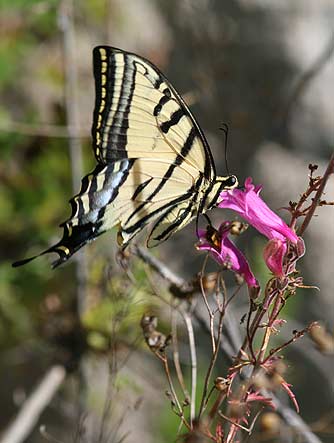
Two-tailed Swallowtail Butterfly
nectaring on cut-leaf penstemon
Picture of Two-tailed Swallowtail butterflies drinking water
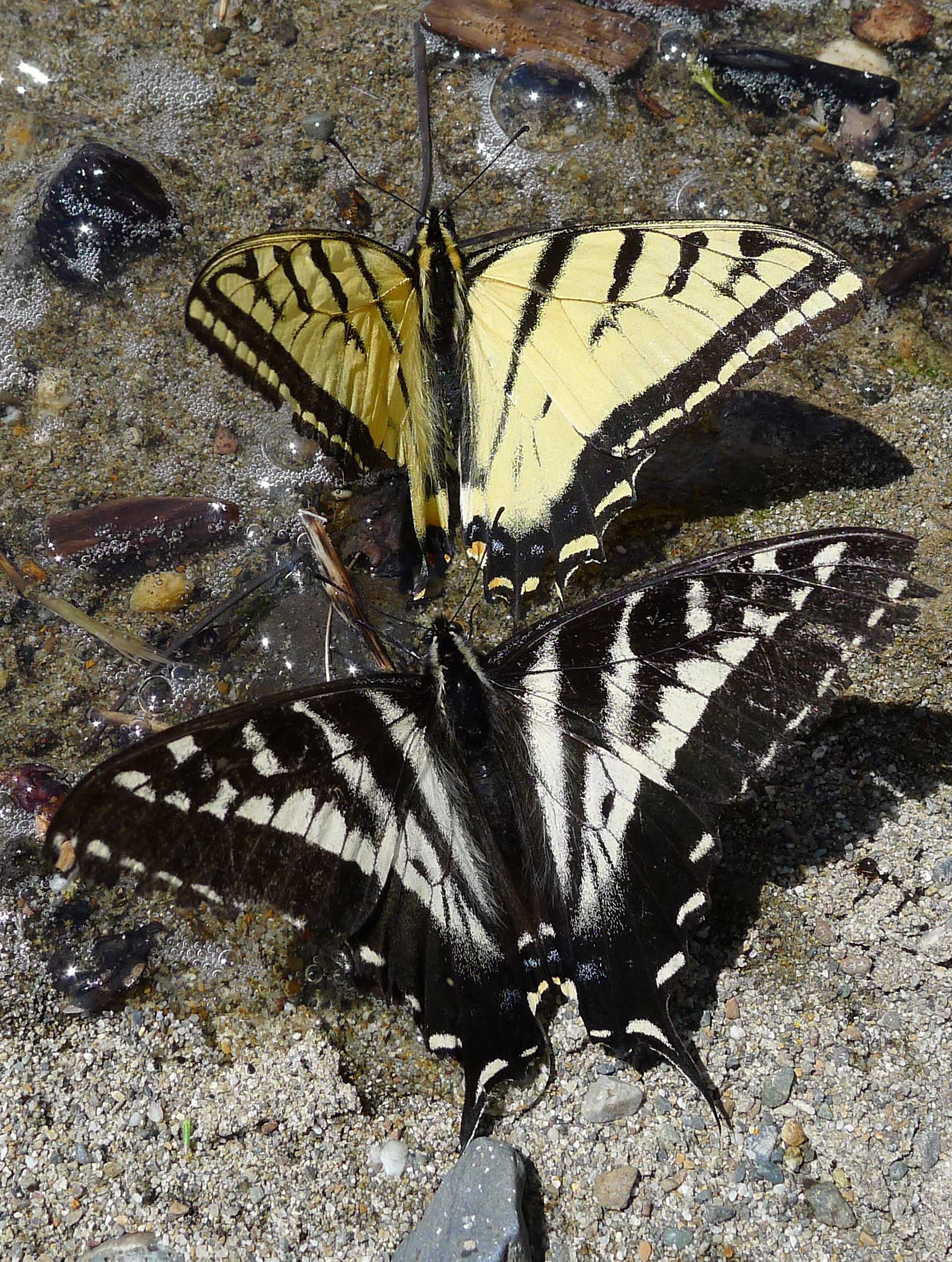
Two-tailed Swallowtail Butterflies
drinking from wet sand

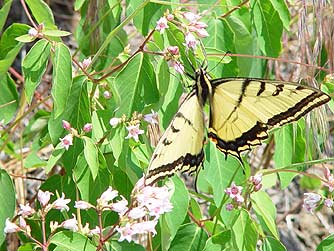
Two-tailed Swallowtail butterfly - Papilio multicaudata
Two-tailed Swallowtail Butterfly
nectaring on wavy thistle

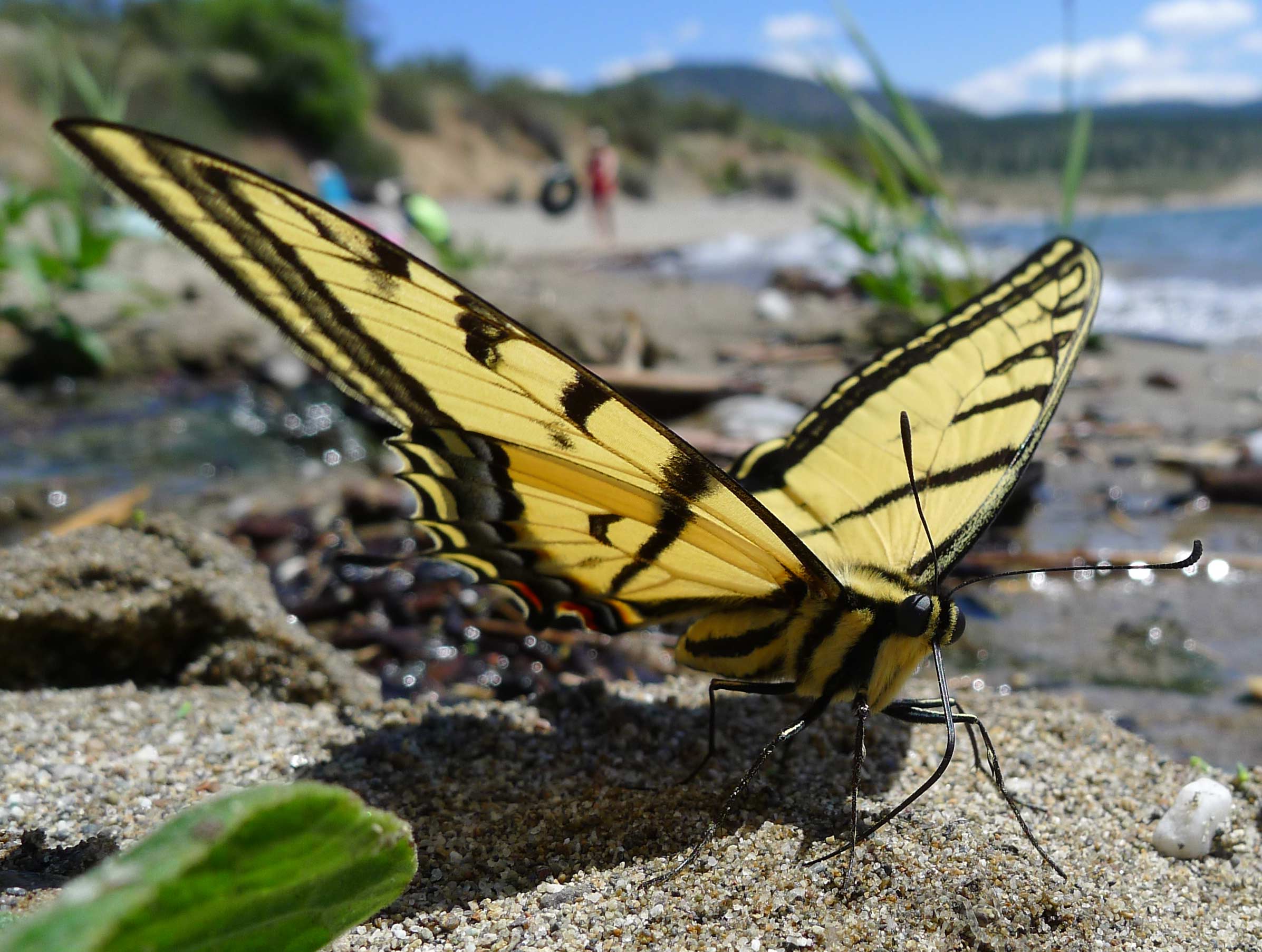
Two-tailed swallowtail butterflies (Papilio multicaudata) have adapted to rely on ash (Fraxinus), hop tree (Ptelea), and chokecherry (Prunus) as host plants for their caterpillars, while adult butterflies prefer nectar from thistles, milkweeds, California buckeye, lilac and others.

The upper surface of the male forewing has narrow black stripes and each hindwing has 2 tails. Wingspan is 3-1/2 to 5 inches.

These photos were taken in July and August.